
Table Of Contents
- How to Build a Career in HR and People Management in the UK
- Understanding the HR and People Management Profession in the UK
- Is HR the Right Career for You?
- Common Entry Routes into an HR Career in the UK
- The HR Career Path: What Progression Looks Like
- The Role of CIPD Qualifications in an HR Career
- Studying While Working or Career-Changing
- Gaining Practical HR Experience
- Building Confidence and Professional Identity
- Realistic Expectations About HR Careers
- How We-are-HR Supports Aspiring HR Professionals
- Reflecting on Your Next Steps
- A Gentle Next Step
Building a career in HR and people management in the UK can feel both exciting and overwhelming, particularly if you are new to the profession or considering a career change. Many aspiring HR professionals tell us they are drawn to HR because they enjoy supporting people, shaping workplace culture, and making a meaningful impact at work, but they are unsure how to turn that interest into a credible, sustainable career.
The good news is that HR in the UK is a well-structured profession with clear development pathways, recognised qualifications, and a strong professional body in the Chartered Institute of Personnel and Development (CIPD). With the right expectations, preparation, and support, it is entirely possible to move into HR or people management even without prior HR experience.
This guide is prepared to act as a practical, reassuring starting point. It explains what an HR career really looks like in the UK, how people typically enter the profession, the role of CIPD qualifications, and how to build confidence and capability over time.
Understanding the HR and People Management Profession in the UK
HR, often referred to as people management or people practice, is about far more than policies and paperwork. At its best, HR exists to enable organisations to perform well through their people, while ensuring fairness, inclusion, wellbeing, and ethical practice.
In the UK, HR professionals work across a wide range of areas. These include recruitment and onboarding, employee relations, learning and development, reward, wellbeing, diversity and inclusion, performance management, and organisational change. Some roles are generalist, covering many aspects of people practice, while others are more specialists.
It is also important to understand that HR operates within a strong legal and ethical framework. Employment law, data protection, and ethical decision-making all form part of everyday HR work. This is why structured learning and professional standards are so important when developing an HR career.
Is HR the Right Career for You?

People are often attracted to HR because they “like people”, but effective HR requires more than good intentions. Successful HR professionals combine empathy with professional judgement, curiosity with structure, and confidence with humility.
A career in HR may suit you if you enjoy problem-solving, listening to different perspectives, working with managers, and balancing organisational needs with employee wellbeing. It also suits those who are comfortable navigating ambiguity and learning continuously, as employment practices and workplace expectations change regularly.
It is equally important to be realistic. HR roles can involve difficult conversations, manage conflict, and advise within constraints. Understanding this early helps you enter the profession with confidence rather than disappointment.
Common Entry Routes into an HR Career in the UK
There is no single “right” way to start an HR career in the UK. Many people arrive via different professional backgrounds, including administration, education, retail management, customer service, or finance.
Some begin in HR or people-focused administrative roles, such as HR Assistant, People Coordinator, or Learning and Development Administrator. Others move into HR after managing teams in operational roles, bringing valuable people-management experience with them.
Career changers often worry that they lack direct HR experience. In practice, many transferable skills are highly valued in HR, including communication, organisation, stakeholder management, confidentiality, and analytical thinking. The key is learning how to translate your existing experience into HR-relevant language.
The HR Career Path: What Progression Looks Like
An HR career path in the UK is typically progressive rather than linear. Early roles focus on building knowledge, confidence, and professional judgement. As experience grows, responsibilities broaden and deepen.
At an entry or early-career level, roles often involve supporting HR processes, maintaining records, assisting with recruitment, and responding to routine people queries. With time and development, professionals move into advisory roles, where they provide guidance to managers, handle employee relations issues, and contribute to policy and people initiatives.
More experienced practitioners may progress into HR Business Partner, Head of HR, People Manager, or specialist leadership roles. Progression depends not only on job titles, but on capability, impact, and professional credibility.
The Role of CIPD Qualifications in an HR Career
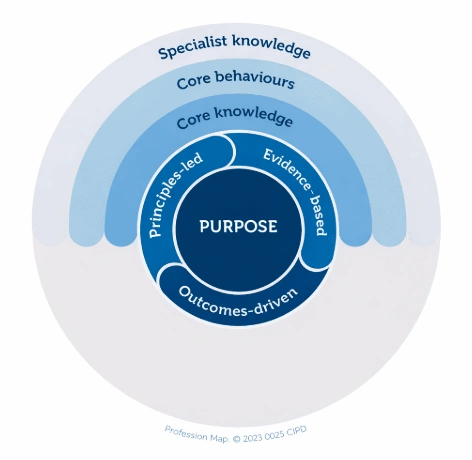
In the UK, CIPD qualifications play a central role in supporting HR careers. They provide structured learning, professional language, and alignment with recognised standards of practice.
For those new to HR, a CIPD Level 3 qualification introduces the fundamentals of people practice. It helps learners understand how organisations work, the employee lifecycle, core employment law principles, and the ethical foundations of HR.
CIPD Level 5 is often undertaken by those with some HR experience or those aiming to move into advisory or people-management roles. It develops analytical thinking, decision-making, and the ability to influence managers and stakeholders.
These qualifications do not guarantee jobs or promotions, but they significantly support employability by building confidence, credibility, and practical understanding aligned to UK practice.
Studying While Working or Career-Changing
Many aspiring HR professionals are balancing study with work, family, or other commitments. Flexible learning models are therefore essential. Online and blended learning options allow learners to progress at a sustainable pace, applying learning directly to real-world contexts.
Support also matters. Tutor guidance, feedback, and a sense of learning community can make a substantial difference, particularly for those new to academic HR study or returning to education after a long break.
Choosing a CIPD-approved centre ensures that your learning is aligned with professional standards and assessed appropriately. It also reassures employers that your qualification has been delivered and quality-assured correctly.
Gaining Practical HR Experience
Alongside formal learning, practical experience is essential for building an HR career. This does not always mean securing a full HR role immediately. Shadowing HR colleagues, supporting people-related projects, or volunteering for HR tasks within your current organisation can all provide valuable exposure.
Keeping a reflective log of what you observe and learn helps you connect theory to practice. This reflective habit is particularly useful for CIPD learners, as it mirrors professional development expectations within HR.
Employers value candidates who can demonstrate learning agility, ethical awareness, and a realistic understanding of HR challenges, even at early career stages.
Building Confidence and Professional Identity
One of the biggest challenges for aspiring HR professionals is confidence. HR has its own language, frameworks, and ways of thinking, which can feel unfamiliar at first.
Confidence develops over time through learning, practice, and reflection. Engaging with professional discussions, attending webinars, and reading reputable HR resources can help you feel more fluent in people practice conversations.
Professional identity is also shaped by values. Ethical practice, fairness, and evidence-based decision-making sit at the heart of the profession. Developing these early helps you build credibility and trust.
Realistic Expectations About HR Careers
It is important to approach an HR career with realistic expectations. Progression takes time, and early roles may feel administrative or routine. These experiences are not wasted; they provide the foundation for sound professional judgement later.
HR careers are also influenced by organisational context. The scope and pace of HR roles vary significantly between sectors and organisation sizes. Being open to learning in different environments strengthens long-term career resilience.
How We-are-HR Supports Aspiring HR Professionals
At We-are-HR, we work with learners at all stages of their HR and people-management journey. As a CIPD and CMI accredited training provider, our focus is on supportive, flexible learning that fits around real lives.
We understand that many learners are career changers or returning to study. Our tutor-led approach, clear guidance, and emphasis on wellbeing help learners build confidence alongside competence. We also encourage reflective practice and realistic career planning, rather than quick fixes or promises.
Whether you are exploring HR for the first time or looking to strengthen your professional foundation, having the right support makes a meaningful difference.
Reflecting on Your Next Steps
Building a career in HR and people management in the UK is a gradual, purposeful process. It involves learning, practice, reflection, and professional growth. There is no need to rush or compare your progress to others.
Take time to understand the profession, assess your transferable skills, and explore structured learning options that align with your goals. With commitment and the right support, HR can offer a rewarding, impactful career that grows with you over time.
A Gentle Next Step
If you are considering a career in HR or exploring CIPD study options, a conversation with an experienced course advisor can help you clarify your next step. At We-are-HR, we are always happy to offer guidance, answer questions, and support you in making informed decisions about your learning and professional development at a pace that feels right for you.
Contact us at 020 3740 0757
Email us at sales@we-are-hr.com