
Table Of Contents
- Is HR a Good Career in 2026? Pros, Cons and Realistic Expectations
- What Does an HR Career Look Like in 2026?
- Why People Are Drawn to a Career in HR
- The Rewards of Working in HR
- The Challenges and Pressures of an HR Career
- How the HR Profession Is Evolving in the UK
- What Employers Realistically Expect from HR Professionals
- Is HR a Good Career for Career Changers?
- The Role of CIPD Qualifications in Decision-Making
- Linking HR Career Decisions to Long-Term Development
- A Thoughtful Next Step
For many people exploring a career in HR in the UK, the question is no longer “What does HR do?” but “Is HR still a good career choice in 2026?”
The people profession has changed significantly over the past decade. Hybrid working, wellbeing pressures, skills shortages, AI, and rising employee expectations have all reshaped what organisations ask of HR teams. At the same time, HR roles are more visible, more scrutinised, and often more emotionally demanding than ever before.
For career changers, aspiring HR professionals, and CIPD Level 3–5 learners, it is vital to approach the profession with clarity rather than assumptions. HR can be rewarding, purposeful and intellectually stimulating but it is not always easy, and it is not the right fit for everyone.
This blog offers a balanced, realistic view of whether HR is a good career in 2026, exploring the opportunities, the challenges, how the profession is evolving in the UK, and what employers genuinely expect from HR professionals today.
What Does an HR Career Look Like in 2026?
In 2026, HR in the UK is firmly positioned as a people-focused profession operating within a commercial, ethical and regulatory environment. While administrative tasks still exist, many organisations expect HR to contribute insight, judgement and influence rather than simply process activity.
HR professionals today are increasingly involved in workforce planning, employee relations, organisational change, wellbeing strategies, learning and development, and advising managers through complex people decisions. Technology has automated some transactional work, but it has also raised expectations around data literacy, judgement and ethical oversight.
Importantly, HR is no longer viewed solely as a “support function”. In many organisations, it is expected to play a visible role in shaping culture, values and long-term sustainability even when operating with limited resources.
Why People Are Drawn to a Career in HR
For many, the appeal of HR lies in its human focus. A people management career allows professionals to support individuals, influence working environments, and help organisations become healthier and more inclusive places to work.
HR can offer variety. Few roles are identical, and no two days are the same. One day may involve supporting a manager with a difficult conversation, while another may focus on learning design, policy review or employee engagement initiatives. This variety appeals to those who enjoy problem-solving and continuous learning.
There is also a sense of purpose that attracts many career changers. HR professionals often play a quiet but significant role during pivotal moments in people’s working lives; onboarding, development, conflict, absence, and career transitions. When practised ethically, this can be deeply meaningful work.
The Rewards of Working in HR
A well-supported HR career can be professionally fulfilling. Many HR practitioners value the opportunity to develop trusted relationships with managers and teams, applying both empathy and professional judgement to complex situations.
HR also offers long-term development potential. The HR career path in the UK allows for progression into generalist, specialist or leadership roles over time, depending on interests and organisational context. Skills developed in HR such as influencing, ethical decision-making, and systems thinking are transferable across sectors.
For those who enjoy reflective practice, learning and professional development, HR offers ongoing intellectual challenge. The profession continues to evolve, requiring practitioners to stay informed, adaptable and self-aware.
The Challenges and Pressures of an HR Career
While HR can be rewarding, it also carries significant challenges that are sometimes underplayed online.
One of the most demanding aspects is emotional labour. HR professionals regularly deal with conflict, distress, performance issues, redundancy, and sensitive personal circumstances. Balancing compassion with organisational responsibility requires resilience and emotional intelligence.
HR also operates under scrutiny. Decisions may be questioned by employees, managers and senior leaders, sometimes simultaneously. This can feel uncomfortable, particularly for those new to the profession who are still building confidence.
There is also the reality of limited influence in some organisations. Not all employers are people-centred, and HR professionals may find themselves advocating for good practice without always being listened to. Understanding these dynamics is essential for setting realistic expectations.
How the HR Profession Is Evolving in the UK

The HR profession in 2026 is shaped by several key trends. Wellbeing and mental health are no longer peripheral concerns; they are central to workforce sustainability. HR is often expected to lead or coordinate wellbeing strategies, while recognising the limits of its role.
There is also increased emphasis on ethical practice, inclusion and fairness. HR professionals are expected to challenge poor behaviour, address bias, and promote dignity at work even when this requires difficult conversations.
Technology continues to influence HR, but it has not replaced professional judgement. Instead, it has heightened the need for critical thinking, data interpretation and ethical oversight. AI tools may support efficiency, but responsibility still sits with people professionals.
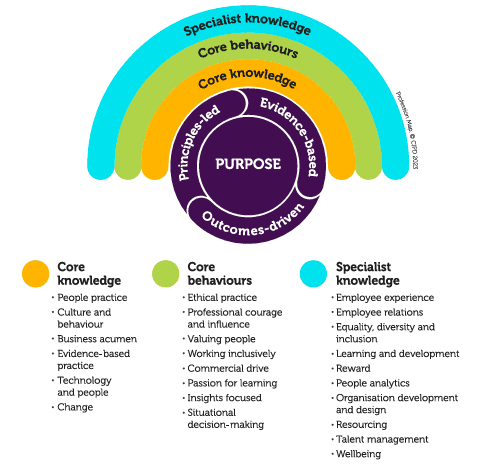
Professional standards, guided by bodies such as the Chartered Institute of Personnel and Development, remain central in helping HR practitioners navigate these changes responsibly.
What Employers Realistically Expect from HR Professionals
Employers in 2026 tend to value HR professionals who are pragmatic, credible and emotionally intelligent. Technical knowledge matters, but so does the ability to communicate clearly, influence managers, and apply policy with judgement rather than rigidity.
For early-career HR professionals, employers do not expect perfection. They do expect curiosity, ethical awareness, confidentiality, and a willingness to learn. Being able to explain why decisions are made, not just what the policy says, is increasingly important.
Commercial awareness is also growing in importance. HR professionals are expected to understand the organisational context, budgets, priorities and pressures and to offer people advice that is realistic as well as principled.
Is HR a Good Career for Career Changers?
For career changers, HR can be a positive option; provided expectations are grounded. Many people bring valuable transferable skills from teaching, healthcare, administration, retail management, or customer service.
What matters is not where you start, but how you reposition your experience and develop HR-specific knowledge. This often involves learning professional language, frameworks and ethical standards, which can feel challenging at first but becomes more natural over time.
Career changers should expect a period of adjustment. Entry roles may feel administrative or less strategic than hoped, but they provide essential exposure and learning. Patience and reflective practice are key during this transition phase.
The Role of CIPD Qualifications in Decision-Making
For those exploring whether HR is the right career, structured learning can provide clarity as well as capability. CIPD qualifications help individuals understand what HR work really involves, rather than relying on assumptions.
CIPD Level 3 introduces the foundations of people practice and is often suitable for those new to HR or considering a career change. CIPD Level 5 builds on this, developing advisory skills and deeper understanding of organisational contexts.
These qualifications do not guarantee outcomes, but they support informed decision-making. Many learners find that studying HR helps them confirm whether the profession aligns with their values, strengths and expectations.
Linking HR Career Decisions to Long-Term Development
Choosing HR as a career should be viewed as a long-term commitment rather than a quick fix. Progression is built through learning, experience, reflection and support. Confidence develops gradually, particularly in areas such as employee relations and advising managers.
Engaging with professional communities, reflective learning, and ethical frameworks helps HR professionals sustain both competence and wellbeing. This is especially important in a profession that involves supporting others through challenge and change.
Understanding your own motivations, boundaries and learning needs is just as important as understanding job titles or qualifications.
A Thoughtful Next Step
So, is HR a good career in 2026? For the right person, with realistic expectations and appropriate support, it can be a meaningful and sustainable professional path. It requires emotional intelligence, ethical awareness and a willingness to learn but it also offers variety, purpose and long-term development.
If you are exploring a CIPD HR career and want guidance rather than pressure, taking time to speak with an experienced learning partner can be helpful. At We-are-HR, we support individuals in understanding the realities of HR, exploring structured learning options, and making informed decisions that align with their goals, circumstances and wellbeing
Choosing a career in HR is not about certainty. It is about informed commitment, supported growth and professional integrity.